-

As sea ice vanishes, Tuktoyaktuk’s shoreline defences buy crucial time against Arctic surges
As sea ice disappears around Tuktoyaktuk, coastal communities are facing increased flooding and erosion. Climate adaptation researcher Mauricio Carvallo Aceves highlights how warming ocean waters are accelerating shoreline loss by thawing permafrost and allowing stronger waves to strip away sediment.
-

Giulia Belotti: What do Vancouverites actually mean by Yes or No to the Broadway Plan?
What do Vancouverites think of all the changes to Broadway? If you’re curious what the research says, Giulia Belotti’s latest work is a good place to start.
-

Old Growth on the Chopping Block for the North Coast Transmission Line
As plans move forward for a new transmission line in northwest B.C., Kai Chan highlights the importance of protecting what remains of the province’s old-growth forests, arguing that the loss of any protected old-growth habitat is significant in the face of ongoing biodiversity decline.
-
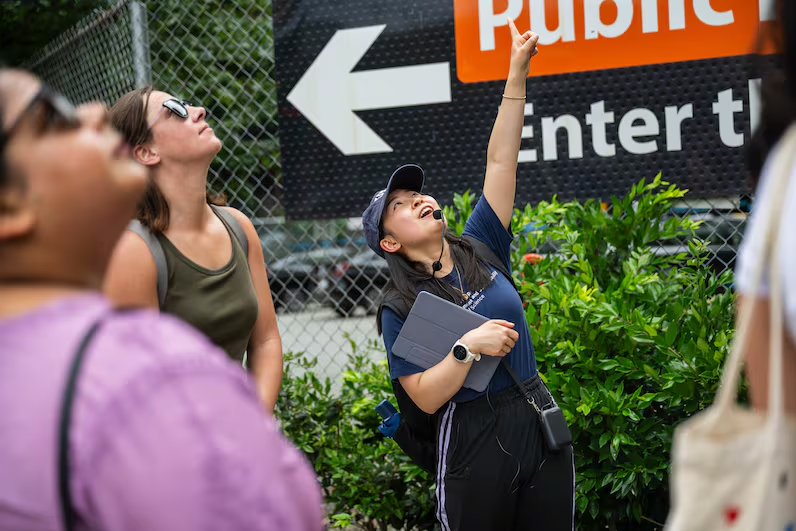
Why this student offers tours of climate solutions hidden throughout Vancouver
As part of her PhD research, Yunfei Li leads Urban Future Walks, guided tours that show participants how green infrastructure is shaping Vancouver’s future. Developed with Simon Donner, the project explores whether experiencing climate solutions firsthand can shift people’s emotions, attitudes, and engagement with climate action.
-

You don’t have to give up steak, travel or chocolate to help the climate crisis
You don’t have to give up steak, travel, or chocolate to help address climate change. Jiaying Zhao explores how small, enjoyable changes can have a meaningful impact in her TED Talk and book Leave the Lights On.
-

Should B.C. hospitals ditch the Jell-O and meatloaf? UBC research suggests increasing plant-based meals
What if hospital menus could support both human and planetary health? A study led by Annie Lalande and supervised by Jiaying Zhao found that increasing plant-based meals in B.C. hospitals could reduce environmental impacts while still offering nutritious, appealing food choices.
-
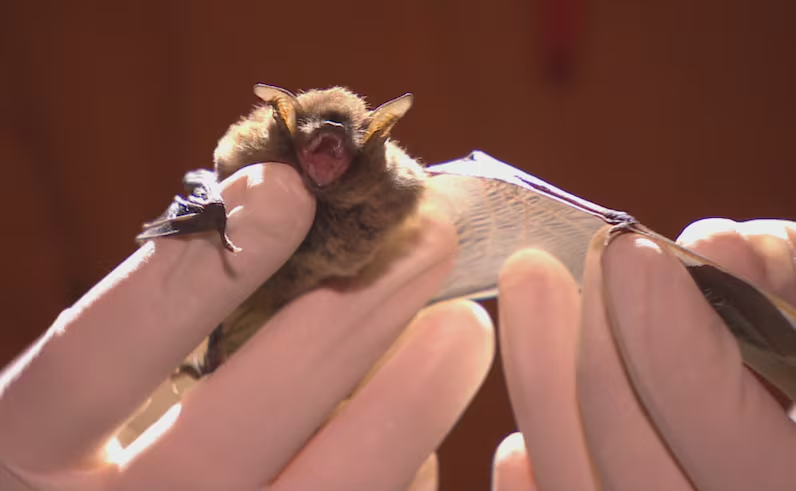
Vets warn pet owners after rabies detected in 2 bats in B.C.
As rabies-positive bats spark concern in B.C., bat ecologist Aaron Aguirre is reminding the public that bats play an essential role in healthy ecosystems.
-

Stop Shaming Yourself Into Better Habits. Science Says This Emotion Works Better
Can joy be a more effective climate solution than guilt? In her book Leave the Lights On, Dr. Jiaying Zhao argues that positive emotions are key to building lasting sustainable habits.
-
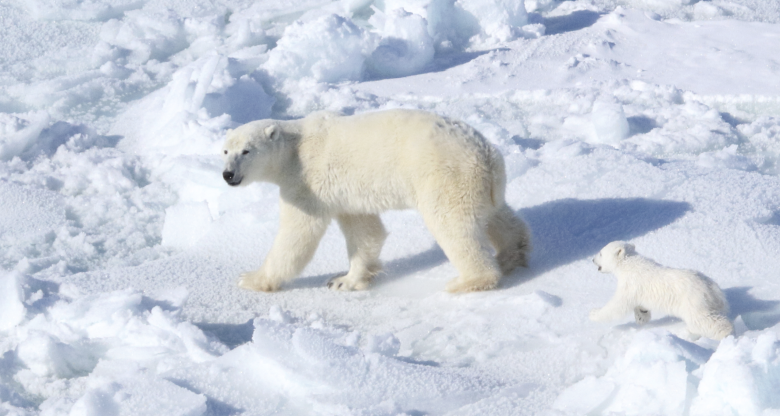
Climate scientists reject highest emission, highest warming climate scenario
Climate projections are evolving as the world transitions away from coal, but Dr. Simon Donner cautions against complacency. While the highest-emissions scenario is now seen as unlikely, Dr. Donner argues that planning for worst-case climate impacts remains essential to building resilient communities.
-

Claire Kremen is elected as a Fellow of the Royal Society of Canada!
Claire is an internationally renowned conservation scientist. She’s now been honoured with one of Canada’s highest accolades for scholars. Please join us in congratulating Claire!
-

Congratulations to Claire Kremen (NSERC CREATE), and Leila Harris and Simon Donner (SSHRC Insight) for their successful grant awards!
IRES professors Claire Kremen, Leila Harris, and Simon Donner’s newly funding projects are titled, respectively, Collaborative Conservation, Reimagining River Governance, and Urban Future Walks!
-

Book Event: Finding Joy in Fighting Climate Change | September 16, 6:16-8:15pm
Join IRES’s Jiaying Zhao and UBC Psych’s Liz Dunn for their book launch on September 16th! This conversation will be moderated by Councilor Sarah Kirby-Yung, the Deputy Mayor of the City of Vancouver, to discuss their new book Leave the Lights On: How Joyful Decisions Can Save Our Species.
-

Remembering the Heat Dome: A Living Memorial Event, Sunday August 16, 1-5 pm @ Creekside Community Centre
Please join UBC researchers and Society Promoting Environmental Conservation, United Way BC Healthy Aging, Climate Disaster Project, and Seniors for Climate for an event on Sunday August 16th to remember the 2021 heat dome.
-

Can a Walk Downtown Change Your Mind on Climate?
While most of what we hear about climate change is learned passively through social media and news outlets, Yunfei Li thinks there might be a better way. Her project explores new ways to engage people on climate change through Urban Future Walks.
-

Not just for golf courses: Electric carts are another EV option hitting the streets
IRES alum Bassam Javed explains why low speed vehicles (like electric carts) are becoming more common for industries such as aviation.
-

The Happiest Way to Fight Climate Change
If you make joyful changes, other people will follow suit, quickly. This is just one insight from Dunn and Zhao’s new book Leave the Lights On, outlining how so many environmentally friendly choices add joy to life! 😊💚
-

Happiness is our best weapon to fight climate change
It turns out that even people who don’t hold strong environmental values exhibit mood benefits from taking climate-friendly actions.
-

Mark Johnson and Kai Chan awarded new Discovery Grants: Changing landscapes, the water cycle, and ecological food subsidies
A total of 199 new programs and projects led by UBC researchers were awarded more than $47.6 million through the 2025 NSERC Discovery Research Program competition.
-

Decisions on major projects often ignore cultural and social losses
A more legitimate approach to compensating harms requires moving beyond improved methods toward rethinking the rules that frame the overall decision-making process. From IRES’s Terre Satterfield & Robin Gregory, and U of Oregon’s Paul Slovic.
-

Seaweed Farming is Growing in BC. Mind the Risks.
John Driscoll and Edward Gregr, adjunct professors at IRES, say that this form of aquaculture has a lot of benefits but needs new regulations to manage potential environmental threats.
-

New Decision Framework Helps Chart The Course To Zero Impact Shipping
“Decision support” is a growing academic and professional field, said Simone Philpot, who led the UBC-NRC-Clear Seas research project team as a post-doctoral fellow at IRES.
-

Climate Adaptation: Preparing Vancouver’s Workforce for Coastal Reality | July 14, 3:45pm
Amanda Giang is part of a panel on immediate climate risks & resilience for the PNW: sea level rise, extreme weather, infrastructure vulnerability. Resilience has become an operational necessity.
-

Yunfei Li explores new ways to engage people on climate change through Urban Future Walks
RES PhD student Yunfei Li wants to know whether there are more effective ways to engage people about our changing world. A walk through downtown Vancouver might be one of them.
-

Q&A with Sam Blackwell: How Plastic Sunset researchers are urging our government to mandate lint traps on our washers
IRES students and CoSphere colleagues have launched their Plastic Sunset campaign. We asked Sam Blackwell to tell us more.
-

UBC Micro-certificate in Climate Action Planning: Foundations, Finance and Implementation
This course is for local policy makers, planners, industry players and anyone interested in learning the foundation and practicalities of climate action planning—the goal of the program is to build capacity in different sectors to advance climate action. A background in climate change is not required!
-

Canada has recognized its environmental injustice problem, now it must act on it
Canada has finally acknowledged environmental injustice. Now the real work begins. Manvi Bhalla explains what’s at stake in her new op-ed.
-

Feds didn’t push carbon price backstop in Alberta in show of co-operation: Dabrusin
Simon Donner responds to Prime Minister Mark Carney and Alberta Premier Danielle Smith signing an agreement on Friday to bring Alberta’s effective carbon price — the market price for credits — to US$130 per tonne by 2040, while the headline price in Alberta would also reach US$100 per tonne by 2027, before rising to US$130…
-

The legal block on climate action
Colombia’s conference on phasing out fossil fuels signals climate action isn’t just slowed by politics — it’s blocked by profit-protecting legal systems. Dr. David Boyd explores the global consequences.
-

Climate doom and gloom? Try laughing instead. Activists embrace joy in the fight to save Earth
“We’re actually trying to get people to change their behaviors. And joy is the missing ingredient here,” Zhao said. “All we’re saying is give this a shot.”
-

How AI Can Help Boost Wealth and Share It More Fairly
Dr. Jiaying Zhao and co-authors discuss how AI can boost wealth more equitably. They explain that an AI‑funded basic income is recommended as “it reflects the principle that as machines become more capable, people should become freer to flourish.”
-
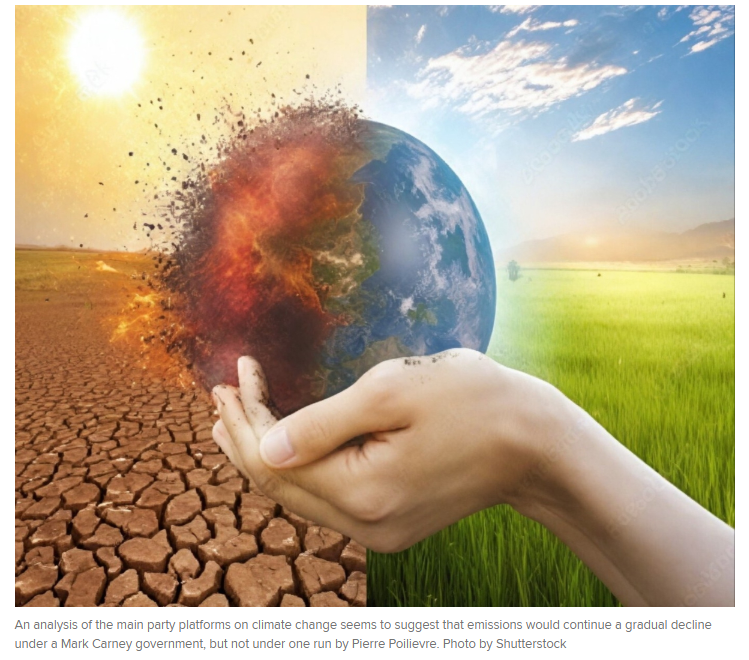
Summer is getting longer, and it’s happening faster than we thought
Dr. Simon Donner and Ted Scott analyzed temperature data spanning 1961 to 2023. The research points to urgent questions: What will earlier spring heat mean for food supply? Do today’s climate models that inform planning and policy fully capture these trends or do they need updating?
-
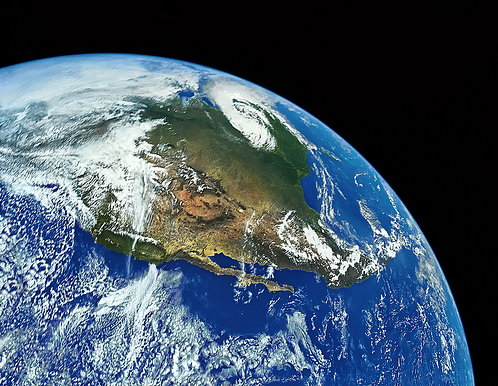
Just Ask: How can I get Involved in Earth Day and volunteering on the Coast?
Simon Donner will be a keynote speaker at the Sunshine Coast Climate Faire in April. This two-day event brings together leading experts, local changemakers, businesses, students, and community members to explore practical and positive climate action! 💚🌱
-
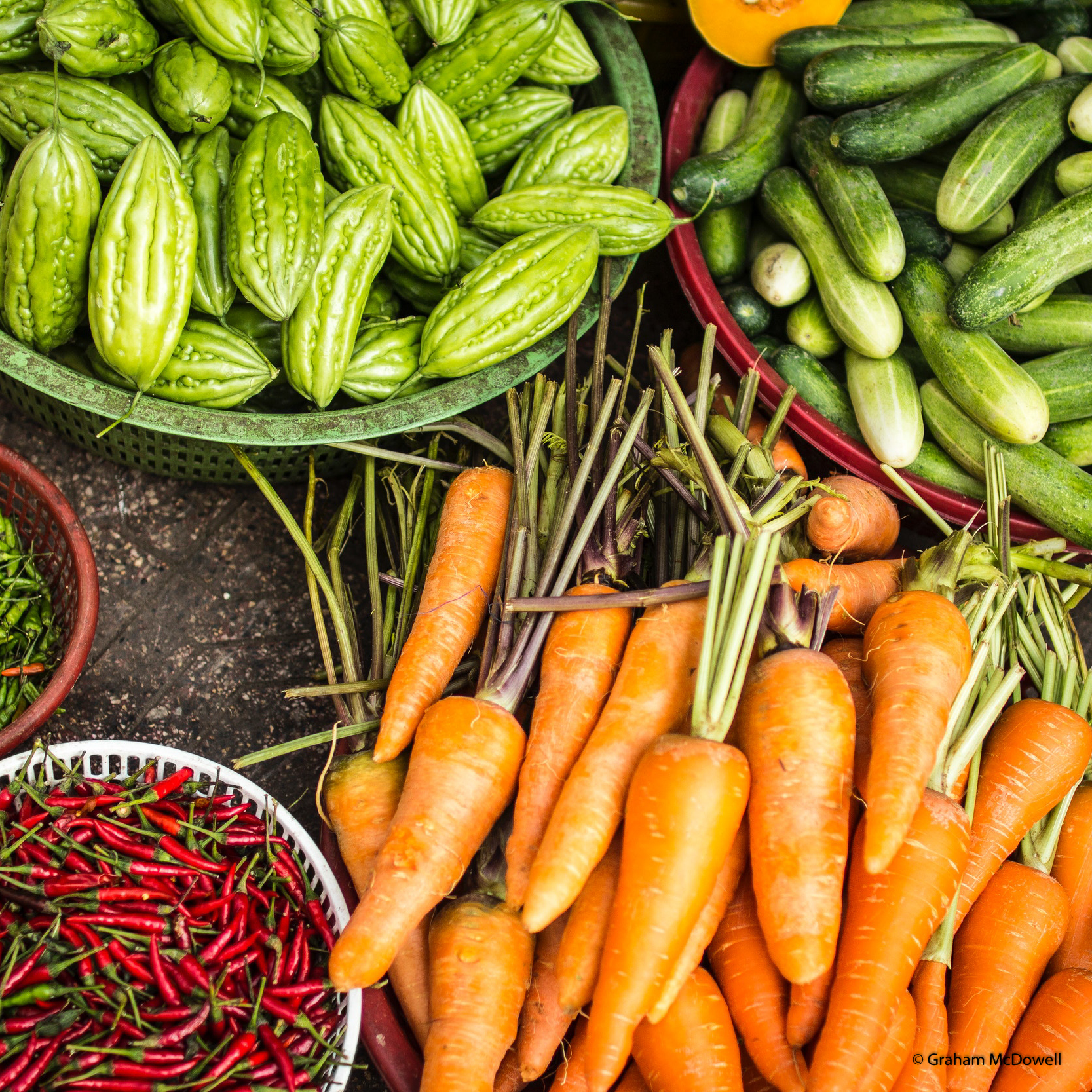
Food shock is inevitable due to the Iran war – and it could get bad
“The oil price spike could help Americans shift to cleaner, more advanced technology: electric vehicles. Instead, the US government is going backwards.” says Simon Donner. While inflation is inevitable due to the Iran war, accelerating to net-zero will help prevent future shocks.
-

Environment committee engaging in ‘junior high behaviour’: former climate advisers
Simon Donner responds to the chaos at the House of Commons environment committee, where MPs traded accusations of filibustering while time ran out, intentionally preventing government climate scientists from sharing their work about Canada’s emissions plan.
-

Hybrid sales up, EV sales down as B.C. struggles to meet sales targets
“In a world where gas prices are spiraling up, EVs would be eventually better. But right now, because they’ve lost the subsidies, there’s this kind of shock. The price went up, and so the demand went down,” explains Milind Kandlikar.
-

Tons of Risk: Drs. Naia Ormaza Zulueta and David Boyd on the rise of illegal pesticide exports in Spain
In El Salto, Drs. Naia Ormaza Zulueta and David Boyd called out Spain’s double standard of exporting thousands of tonnes of pesticides banned in the EU to the Global South.
-

PICS highlights Charlotte Milne for her work advocating for Semá:th First Nation flood rights through mapping
Charlotte is reviewing First Nation flood mapping engagement efforts from across Canada to create a framework that outlines the variety of ways that Nations can engage in (or lead) different stages of flood mapping, across different types of maps.
-

From the Strait of Hormuz to African Markets: How the Persian Gulf Region Conflict Could Deepen Food Insecurity
IRES student Momodou Barry explores how conflict in the Persian Gulf region could deepen food insecurity across Africa by disrupting energy markets, fertilizer supply chains, and global shipping routes. Global food systems are interconnected, and shocks in one region can quickly influence food prices elsewhere.
-

Leaving the Playbook on the Sidelines: Sveinar Soldal on Sustainable Sports and the 2026 FIFA World Cup
Despite lofty promises, the upcoming World Cup is set to become the most emission-intensive sporting event in history.
-

Creating Communities to Help Interdisciplinary Scientists Thrive
Dr. Navin Ramankutty explains that as more researchers connect across disciplinaries, science will be better able to pursue solutions that address complex, urgent problems to secure livelihoods, food security and to safeguard our planet’s environmental health. Picture credits: Attendees socialize during an event at the 5th Open Science Meeting for the Global Land Programme (GLP)…
-

A Reminder About The Food We Eat: “Every Seed We Place In The Earth Is An Act Of Trust”
🍎🍗How can we reconcile our love of food with the reality that many are sourced in ways that are warming our planet? Research by Juan Diego Martinez and Navin Ramankutty explains how agricultural policies can make peace with the climate through different declarations. Photo via Bakd&Raw by Karolin Baitinger
-

Encouragement boosts people’s likelihood to take climate action
☺️🌍 The fight against climate change is often framed as a sacrifice, Jade Radke’s study finds presenting environmental action in a proactive light makes people more likely to act. “Clear, actionable alternatives make it easier for people to engage,” Radke explains. Bicycle rush hour in Copenhagen, Denmark. Image by Mikael Colville-Andersen via Flickr (CC BY-NC-ND…
-

Dropping EV mandate for emissions standard ‘a mistake’ in Carney’s auto strategy: Climate scientist
🚗⚡Simon Donner shares his viewpoint about Mark Carney’s new automotive plan, which he believes is ‘hamstrung by the fact that we work with the North American automakers who are influenced by the U.S. government – and who are frankly behind on electric vehicles.’ Photo by Michael Fousert via Unsplash
-
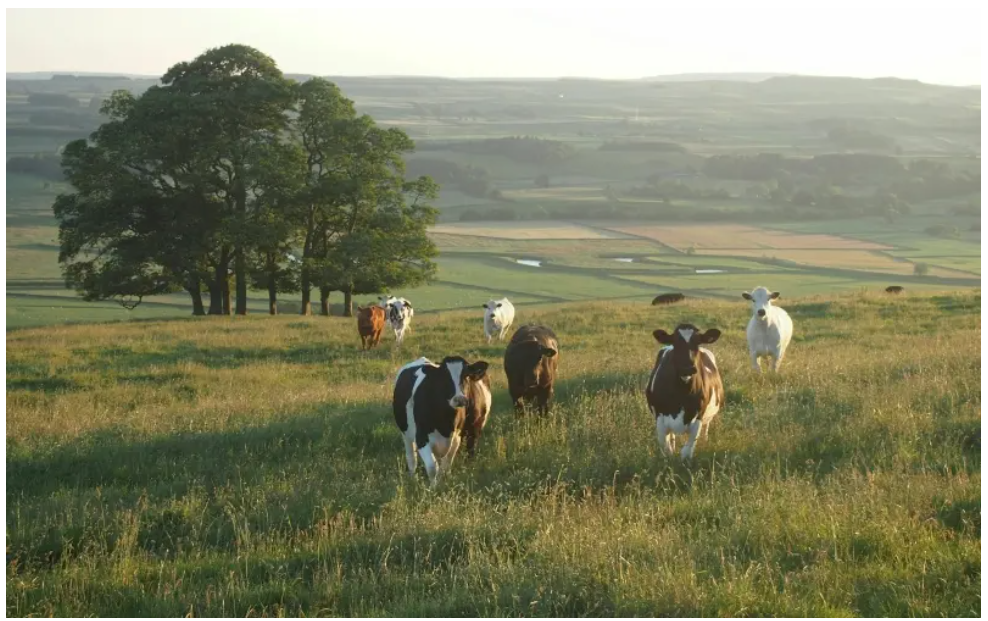
Silvopasture Gains Momentum in the Amazon, but Can It Shrink Beef’s Footprint?
“Farmers may seem like the main decisionmakers, but actually macro-scale factors like policies and market conditions are what drive adoption” explains Tatiana Chamorro-Vargas who is featured in the Good Men Project for her research on silvopastoral systems, which combine trees and pasture.
-
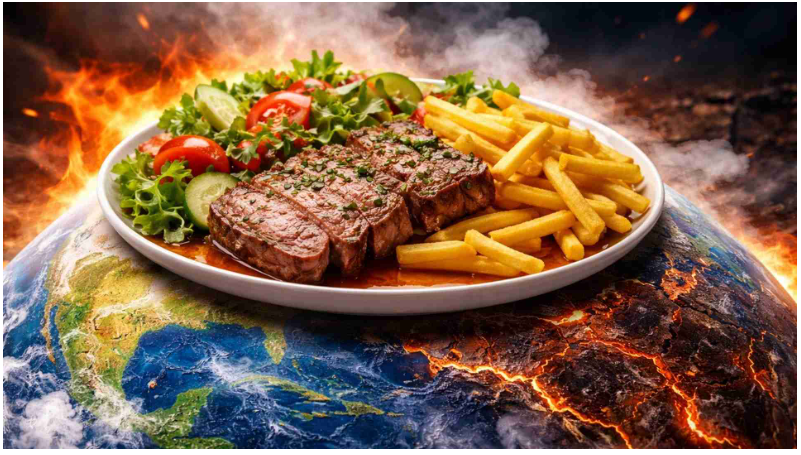
Your dinner may be heating up the planet: study shows that almost half the world’s population needs to change their diet.
🌍🍔 IRES student Dr. Juan Diego Martinez’s study shows that food systems account for more than a third of global greenhouse gas emissions caused by human activity and encourages people to “vote with their forks.”