Pacific Northwest Forests have provided many amenities for thousands of years – as long as humans have inhabited these spaces. How these forests have been used over time has changed in the most recent century as Indigenous uses have been marginalized or outright displaced. Indigenous uses of the forest have been greatly misunderstood, with no small coincidence because this sentiment has expeditiously facilitated others’ uses. The colonial dispossession of Indigenous lands and trade interrupted the ecologic and social harmony enjoyed by Indigenous people with enormous costs to them, to the natural resources, and colonial society. Traditional governance systems were ignored with attempts to dismantle many of them to be replaced by an imposed system created under the Indian Act, and other instruments. Differences between these systems in the governance of resource use are exemplified by the disconnect of social obligations for the stewardship of resources as is found in traditional social institutions. It is these ancient social institutions in the Pacific Northwest that social reproduction transmits the Indigenous knowledge of resources and the power of law.
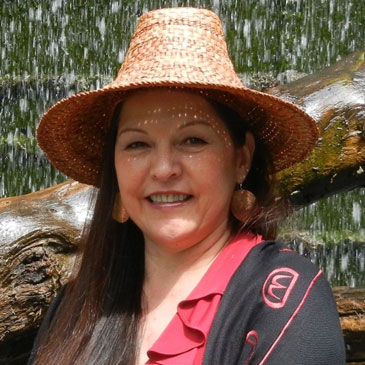
Dr. Teresa (Sm’hayetsk) Ryan, Ts’msyen; Indigenous Knowledge Lecturer, UBC Faculty of Forestry
Bio:
Dr. Teresa (Sm’hayetsk) Ryan (Ts’msyen; Indigenous Knowledge Lecturer, UBC Forestry) is an ecologist specializing in Indigenous stewardship of natural resources and their interdependent connections within complex adaptive systems. She works at the forefront of forestry research to reconcile Indigenous values in projects, practices, and informing policy. Teresa is investigating relationships between salmon and healthy forests and revitalizing traditional Indigenous stewardship in the Salmon Forest Project (funded by Donner Canadian Foundation). She also works on Mother Tree Project (Simard) and is exploring old growth forests in supporting biodiversity and resiliency. Visit Teresa’s TEDxBerkley talk to hear the inspiration to her journey.
As climate change amplifies water challenges, especially in urban areas, policymakers are adopting innovative measures and practices to keep pace with water demand. Coupled with rising water demand, competing use for water, high infrastructure cost, and pollution, local jurisdictions in BC are progressively integrating demand management into water management. It is important to explore what measures are being implemented, the motivation for adoption, the impact on water pricing/billing, and affordability. Survey data from 97 local jurisdictions show that water-use restrictions, volumetric pricing, and conservation campaigns are the measures cities and municipalities commonly implement. Even though metering presents a clear chance to monitor, measure, and regulate residential water use, many jurisdictions face financial and personnel challenges in implementing it. Public engagement, financial stability, and effective planning can assist in ramping up WDM to reduce wasteful water consumption and save the environment.
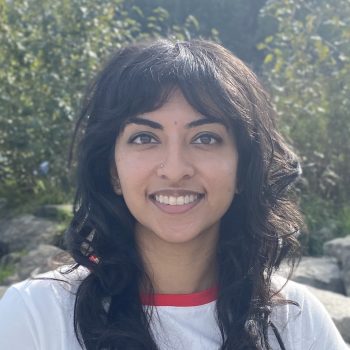
Vincent Chireh, PhD Candidate at IRES
Bio:
Vincent is a PhD Candidate at IRES in UBC, working under the supervision of Leila Harris and Jordi Honey-Rosés. His research broadly focuses on water governance, global climate change, environmental sustainability, and political ecology. His PhD project explores the social equity implication in water governance policies in BC in the context of regulating demand and conserving water in response to climate change. He has also collaborated with BC municipalities to explore strategies to implement climate policies to achieve equitable outcomes. His research agenda builds on this foundation to explore social equity in environmental management, including resource management, climate mitigation and adaptation.
Talk summary:
Solutions to environmental and social problems are often framed in dichotomous ways, which can be counterproductive. Instead, multiple solutions are needed to solve the problem. Here we examine how framing influences people’s preference for multiple solutions to environmental and social problems. In a pre-registered experiment, participants (N=1,432) were randomly assigned to one of four framing conditions (multi-cause frame, multi-impact frame, multi-solution frame, and control). In the first three conditions, participants were presented with a series of problems (e.g., climate change, plastic pollution, homelessness, police reform), each framed with multiple causes, multiple impacts, or multiple solutions to the problem. The control condition did not present any framing information. Participants indicated their preferred solution, perceived severity and urgency of the problem, and their dichotomous thinking tendency. Pre-registered analysis showed that none of the three frames had a significant impact on the preference for multiple solutions, perceived severity, perceived urgency, or dichotomous thinking. However, exploratory analyses showed that perceived severity and urgency of the problem were positively correlated with people’s preference for multiple solutions, but dichotomous thinking was negatively correlated with multi-solution preference. These findings show a limited impact of framing on multi-solution preference. Future interventions should instead focus on increasing perceived severity and urgency, or decreasing dichotomous thinking to encourage people to adopt multiple solutions to address complex environmental and social problems.
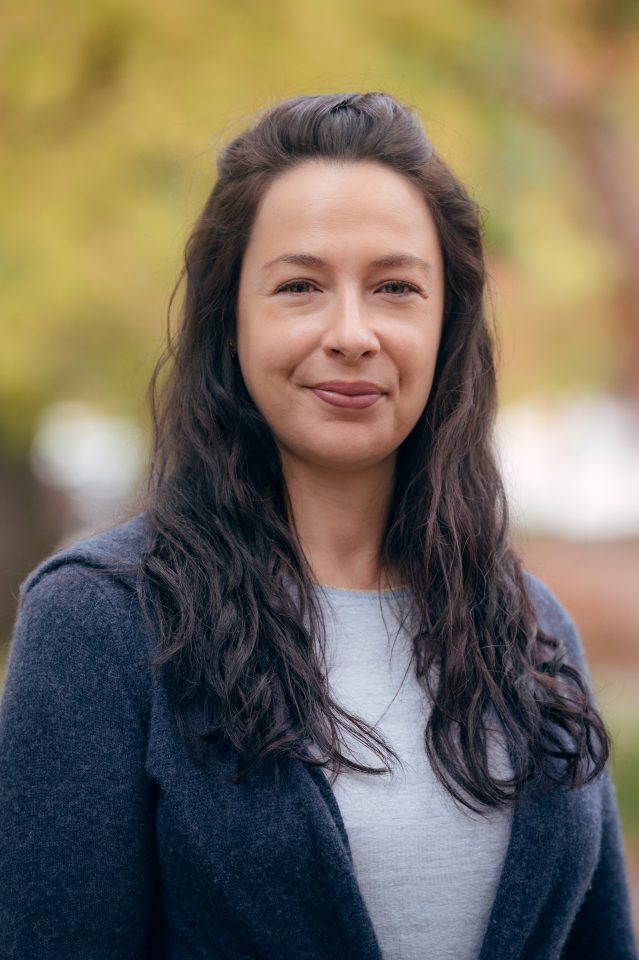
James Wu, MSc student at IRES
Bio:
James Wu is a Master of Science student at IRES under the supervision of Dr. Jiaying Zhao and Dr. Claire Kremen. His current research focuses on behavioural interventions aimed at reducing dichotomous thinking and promoting a multi-solution approach to important societal issues (e.g., climate change, plastic pollution). James is also an ecologist by training, and has been involved in projects that examine the interplay between biodiversity, agricultural intensification and crop productivity, as well as how climate change generates trophic cascades.
This seminar is cancelled. The speaker is sick. Sorry for the inconvenience.
Talk summary:
Historically and contemporarily, colonial policies and prejudices have deeply affected Indigenous food systems and thus Indigenous bodies. For Cree peoples in Manitoba, these policies include the criminalization of practicing traditional medicines, residential schools and land dispossession in the name of development. However, despite the challenges and interruptions to food and cultural systems, Cree Elders understand food to be sacred, and moreover, a healer. This qualitative study, grounded in Indigenous research methodologies, sought to investigate the role of food in Cree culture, through understanding how Elders incorporate food into their helping and healing practices. Using metaphor to make meaning of the Elder stories, this research articulates the role of food in Cree culture: through feeding oneself, one’s ancestors, and one’s community. The Elders revealed the rich depth of Cree food knowledges that underlie Cree culture, from star stories, language, and grieving ceremonies to knowledge of plant and food medicines. This presentation is an exploration of Cree guidance for revitalizing and rebuilding Cree food systems as part of a larger Indigenous food sovereignty framework.
Dr. Tabitha Robin, Assistant Professor Faculty of Land and Food Systems
Bio:
Tabitha Robin is a mixed ancestry Metis and Cree researcher, educator, and writer. She is an Assistant Professor in the Faculty of Land and Food Systems at the University of British Columbia. She spends much of her time learning about traditional Cree food practices.
Help improve the reach of your research and your skills! Communicating your work to a wider audience can help inform policy and society, and gets you hired. Join Nivi Thatra for this free workshop covering how to 1- write a lay abstract/summary of your research, which is a requirement for all UBC grad students when submitting your dissertation and, 2- getting starting with or refining your professional online presence.
Please bring a research topic, paper, or online profile (IRES profile, Twitter, LinkedIn, and/or ORCID iD, ResearcherID and/or Google Scholar profile) on which to practice your newfound skills. This hour is for YOU… use it to check off part of your dissertation, prep for a presentation, or update your professional profiles.
Nivretta Thatra, IRES Communications Manager
Bio:
Nivi is a communicator with a scientific sense of curiosity. After 10 years learning about and working in neuroscience, Nivi now broadens the reach of academic research at IRES by writing, posting, and sharing the department’s interdisciplinary efforts towards a more sustainable future.
Transit-oriented development (TOD) is increasingly recognized as a promising approach to reduce GHG emissions, being transportation a major emitter in urban areas. However, densification and TOD are subjects of intense debate and controversy. This research sheds light on urban residents’ perceptions of transit-oriented development, focusing on the Broadway Plan, a transit-oriented initiative recently approved by the City of Vancouver, as a case study. Through the analysis of public hearings as well as semi-structured interviews, patterns in the perceptions of residents, community groups, and experts towards transit-oriented development were identified. The study reveals that people’s lived experiences significantly shape their attitudes towards development, influencing their vision of an ideal city and the policy direction they believe local governments should take. Understanding these diverse perspectives provides valuable insights for shaping future transit-oriented development policies that consider the needs of both present and future residents.
Giulia Belotti, IRES MA Student
Bio:
Giulia is a master’s student at the Institute for Resources, Environment, and Sustainability, supervised by Dr. Milind Kandlikar. She completed her undergraduate studies at the University of Trento in Political Science and International Relations. Giulia is interested in the social and political aspects of sustainability transitions and her master’s thesis explores the housing and climate crisis nexus, investigating urban resident’s perceptions of transit-oriented development projects. Giulia is also involved in a community-based, participatory research project exploring the impact of extreme heat on precariously housed individuals in Metro Vancouver. While at UBC, she has completed two sustainability internships: with Fraser Basin Council and CityHive.
Talk summary:
The latest global estimate of CO2 emissions from freshwater is similar in magnitude to the annual terrestrial carbon sink. This freshwater emissions estimate included large rivers and lakes, but headwater streams remained poorly characterized. This research sought to quantify the carbon transported, processed, and emitted in a headwater stream located 50 km northeast of Vancouver, BC.
The south coast of British Columbia includes unique ecosystems where highly productive rainforests sit on steep mountainous slopes. As the small stream passes through pools, riffles and waterfalls, turbulence drives dissolved CO2 into the atmosphere, akin to a soda going flat after shaking. Automated sensors were deployed to capture this process and showed at least 40% of transported CO2 is lost within 3.3km downstream of a lake, equivalent to a quarter of the lake’s emission. This implies a potential underestimation of headwater emission from our current global evasion estimates.
Brian Wang, IRES MSc Student
Bio:
Brian is a MSc student in the UBC Ecohydrology Lab supervised by Dr. Mark Johnson. He is interested in understanding local scale carbon processes to determine if these fluxes scale along with the accelerating hydrological cycle. Additional interest in environmental instrumentation having worked with lab-made low cost sensors to high precision gas analyzers.
Brian graduated from UBC with a BSc in Environmental Sciences specializing in atmospheric science and hydrology. During this time, he was a part of various groups assisting in GHG characterization from agricultural fields to glaciers. As a passion project, he compared the effectiveness of machine learning techniques in forcing energy balance closure.
An opinion piece published today in the Proceedings of the National Academic of Sciences, a peer-reviewed journal of the National Academy of Sciences, urgently calls for more research into the specific pathways by which civilization could potentially collapse due to climate change.
“Scientists have warned that climate change threatens the habitability of large regions of the Earth and even civilization itself, but surprisingly little research exists about how collapse could happen and what can be done to prevent it,” says Dr. Daniel Steel, Faculty Associate at IRES and Associate Professor in the School of Population and Public Health.
“A better understanding of the risks of collapse is essential for climate ethics and policy.”
In the article, Dr. Steel and his colleagues, Dr. C. Tyler DesRoches with Arizona State University’s School of Sustainability and Dr. Kian Mintz-Woo from University College Cork, define civilization collapse as the loss of societal capacity to maintain essential governance functions, especially maintaining security, the rule of law, and the provision of basic necessities such as food and water.
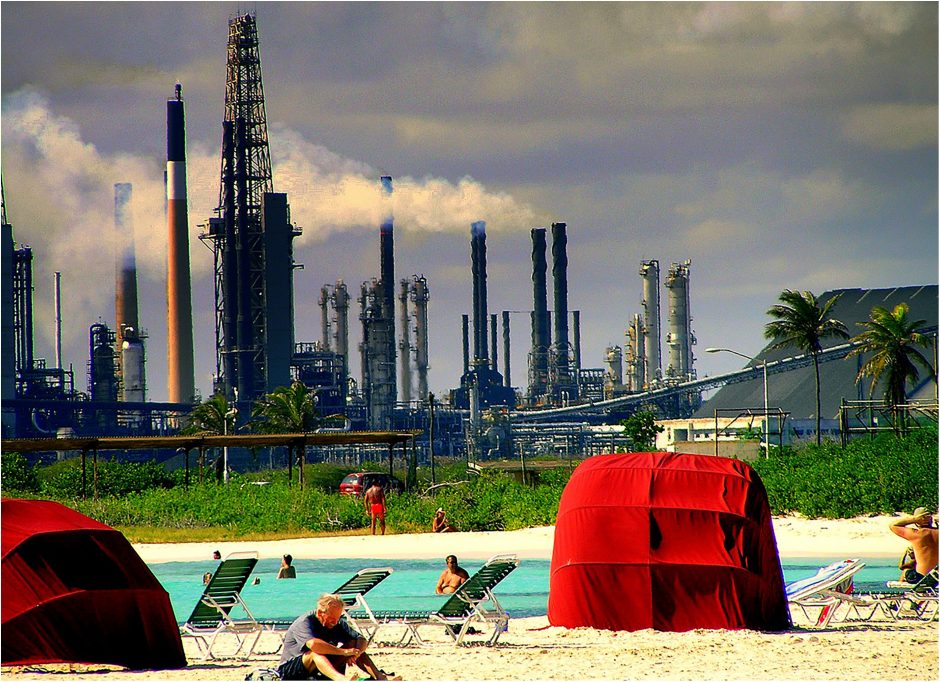
The consequences of climate change are likely to be dire—and in some scenarios, catastrophic. Scholars need to start discussing the mechanisms whereby climate change could cause the actual collapse of civilizations. Image credit: Flickr/Spencer.
The co-authors consider three civilization collapse scenarios:
localized collapse of specific, vulnerable locations;
the collapse of some urban and national areas while the remaining ones experience detrimental climate-related effects such as food and water scarcity;
global collapse where urban areas around the world are abandoned, nations are no more, and global population falls.
It is not only the direct effects of climate change – such as drought, flooding, and extreme heat – that could create collapse risks, but also less-studied mechanisms.
As Dr. Steel and his co-authors explain, climate change may also have indirect effects on systems like trade and international cooperation, which might in turn lead to political conflict, dysfunction, and war. The authors also state that these effects may lessen civilizations’ adaptability which would leave them vulnerable to other shocks, like pandemics.
“The danger climate change poses to civilization shouldn’t just be left for journalists, philosophers, and filmmakers to ponder. Scientists have a responsibility to investigate this, too,” said Dr. Steel.