Daniel L. Forrest

Daniel L. Forrest

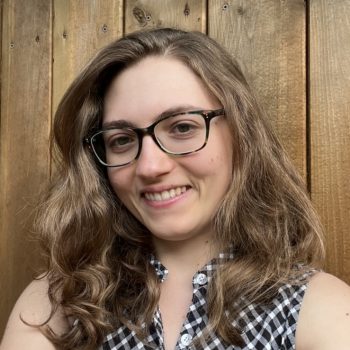
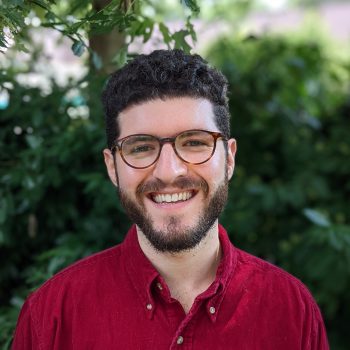
Portrait photo of Daniel L. Forrest

Daniel L. Forrest

PhD Student
IRES Student Society Treasurer, 2022-2023
IRES Seminar Coordinator, 2023-2024

Contact Details

Phone: 778-917-6641

Twitter: @DL_Forrest

Research Interests

Urban Ecology, Biodiversity, Sustainability, Environmental Justice, Conservation

Bio

Urbanization is now a leading cause of biodiversity loss, and access to the limited biodiversity and its benefits that remain in cities is inequitably distributed among people. I am an MSc-PhD fast-track student in the CHANS and M2L2 Labs interested in understanding the hidden ways that human activities in cities may undermine nature and its benefits, so that we can change these relationships to make cities more biodiverse, sustainable, and equitable. In my dissertation, I’ll explore the ways that abundant food waste and turf grass lawns may undermine the diversity of birds in Vancouver, using observations, statistical and conceptual models, field experiments, and interviews. I hope that this research will help identify interventions (e.g., private yard meadows, changes to waste bin designs) that disproportionately amplify urban biodiversity. I’ll be working closely with the City of Vancouver to help shape and apply my research and its findings.

Featured Publications

McManus, L. C., D. L. Forrest, E. W. Tekwa, D. E. Schindler, M. A. Colton, M. M. Webster, T. E. Essington, S. R. Palumbi, P. J. Mumby, and M. L. Pinsky. 2021. Evolution and connectivity influence the persistence and recovery of coral reefs under climate change in the Caribbean, Southwest Pacific, and Coral Triangle. Global Change Biology 27:4307–4321. https://doi.org/10.1111/gcb.15725

Colton, M. A., L. C. McManus, D. E. Schindler, P. J. Mumby, S. R. Palumbi, M. M. Webster, T. E. Essington, H. E. Fox, D. L. Forrest, S. R. Schill, F. J. Pollock, L. B. DeFilippo, E. W. Tekwa, T. E. Walsworth, and M. L. Pinsky. 2022. Coral conservation in a warming world must harness evolutionary adaptation. Nature Ecology & Evolution 6:1405–1407. https://doi.org/10.1038/s41559-022-01854-4

Forrest, D. L., F. Muatiche, C. Riaco, M. K. Gonder, and D. T. Cronin. 2017. Primate Communities Along a Protected Area Border: A Two-site Comparison of Abundance and Hunting Response in Bioko, Equatorial Guinea. African Primates 12:23–36.
Paul Teehan

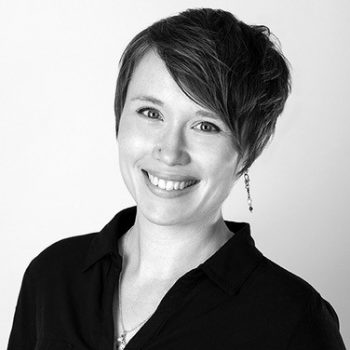
Portrait photo of Paul Teehan

Paul Teehan

PhD with Milind Kandlikar & Hadi Dowlatabadi, 2013
Software Engineering Lead

Contact Details

paul[dot]teehan[at]gmail[dot]com

https://www.linkedin.com/in/paulteehan/

Bio

Teehan completed a PhD with Milind Kandlikar, Hadi Dowlatabadi, and Tony Bi on the topic of life cycle assessment, energy consumption, and carbon footprint of personal electronics and IT systems. He has been working as a data scientist and software engineer in the private sector and is currently a software engineering lead at Recurve Analytics, a software company working to enable demand flexibility as a resource in the energy grid.

Last updated January 2022

Sonja Wilson

Portrait photo of Sonja Wilson

Sonja Wilson

MSc with Hadi Dowlatabadi, 2012, Principal with Reshape Strategies

Contact Details

swillson[at]reshapestrategies[dot]com

https://www.linkedin.com/in/sonja-wilson-b75bb331/ https://reshapestrategies.com/our-team/

Bio

Sonja is a Principal with Reshape Strategies, an infrastructure consultancy. Sonja is a Professional Mechanical Engineer with a Master’s in Resource Management and Environmental Studies, and over ten years of experience in the field of low-carbon energy, particularly district energy systems. Her district energy experience ranges from planning and feasibility studies, to detailed design and construction projects. At Reshape, Sonja is focused on supporting low-carbon projects as they move beyond the feasibility study phase into internal business case development, ownership/business strategies, and policy development.

Last updated January 2022

Darlene Seto

Portrait photo of Darlene Seto

Darlene Seto

MA with Kathryn Harrison, 2012
Lead: Policy and Partnerships, Foundry BC

Bio

Darlene completed her MA at IRES under the guidance of Kathryn Harrison. Since then, she has worked across the social sector, within academia, nonprofit and government settings to improve health and social service systems across BC. She is currently Lead, Policy and Partnerships at Foundry BC.

Charly Lynn Phillips

Portrait photo of Charly Lynn Phillips

Charly Lynn Phillips

MA with Daniel Steel
Scientific Evaluator at the Public Health Agency of Canada’s Public Health Risk Sciences Division
IRES Student Society Trip Coordinator, 2023-24

Research Bio

Charly is an MA student at the Institute for Resources, Environment and Sustainability (IRES) and is supervised by Dr. Daniel Steel. Her research interests are broadly centred on the role of values in policy-relevant debates surrounding sustainable agriculture, especially those regarding meat consumption and animal agriculture.

Prior to beginning her studies at IRES, she worked as a Scientific Evaluator at the Public Health Agency of Canada’s Public Health Risk Sciences Division for two years. There, she was part of a knowledge synthesis and mathematical modelling research team focused on addressing antimicrobial resistance in animal agri-food systems. She holds an undergraduate degree in Biomedical Engineering from the University of Waterloo and has previously worked in research groups at The Hospital for Sick Children (Toronto, ON) in various areas of computational biology.

In her free time, Charly plays violin and piano and loves discovering, dissecting, and discussing new music. She is passionate about knowledge translation and community-engaged research as components of climate activism. In her research, work, activism, and daily life, she takes responsibility for ongoing self-education and action regarding decolonization and equity.

IRES Student Society Bio

My name is Charly and I love music, cooking, and being outside! Along with Tatiana, I was one of the Trip Coordinators for the IRES Student Society. The focus of our role is planning two trips (one in fall, one in spring) so that we can explore the province together, make memories, and bond outside of an academic context. Our top priority was making these trips inclusive, accessible, and fun for everyone.

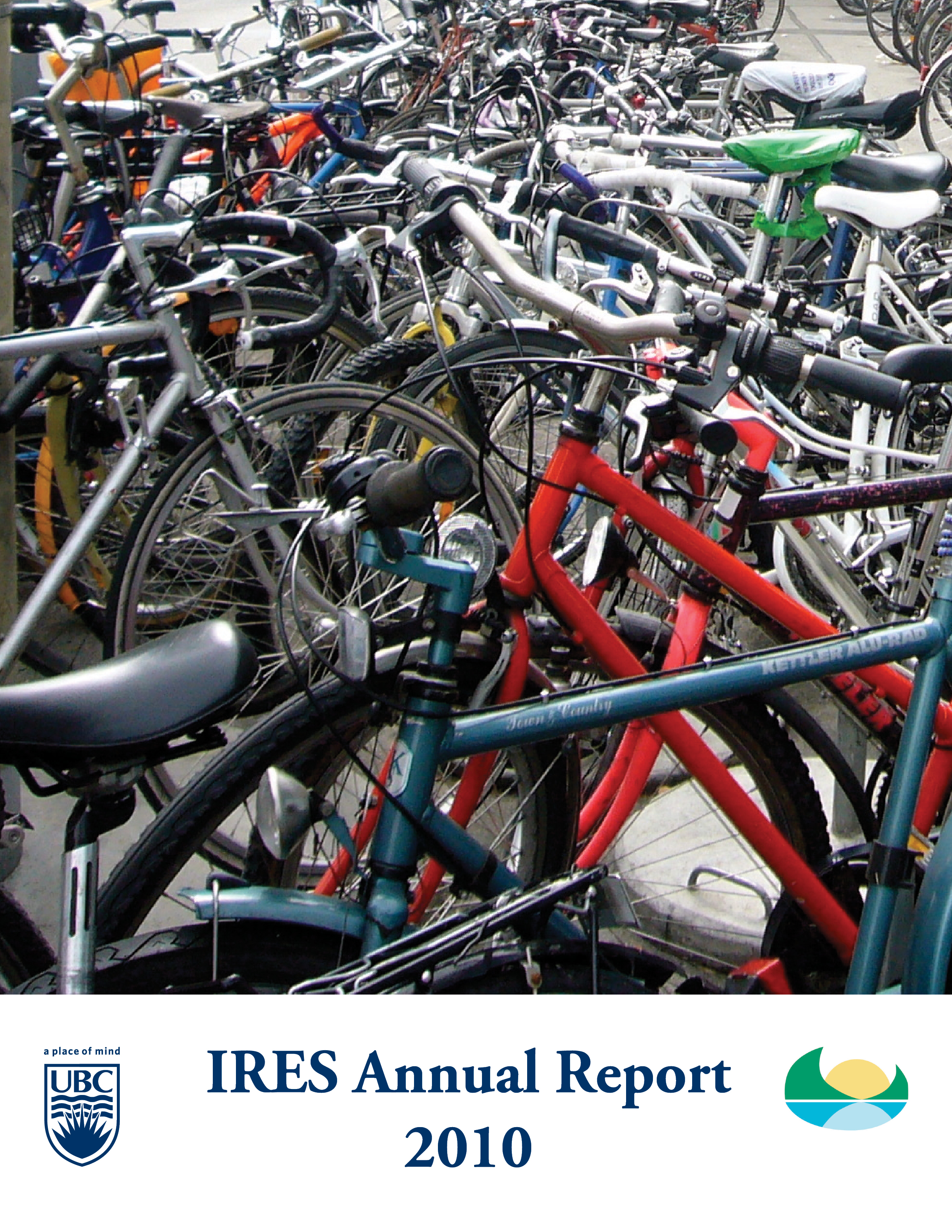
IRES Annual Report 2010

Please click the image to view, and here to download for printing.

IRES Annual Report 2003